The Myth of the Natural Gesture on Stage
The natural gesture on stage is crafted, not accidental. Learn to notice timing, repetition, and style so an actor’s movement reads clearly without seeming forced.
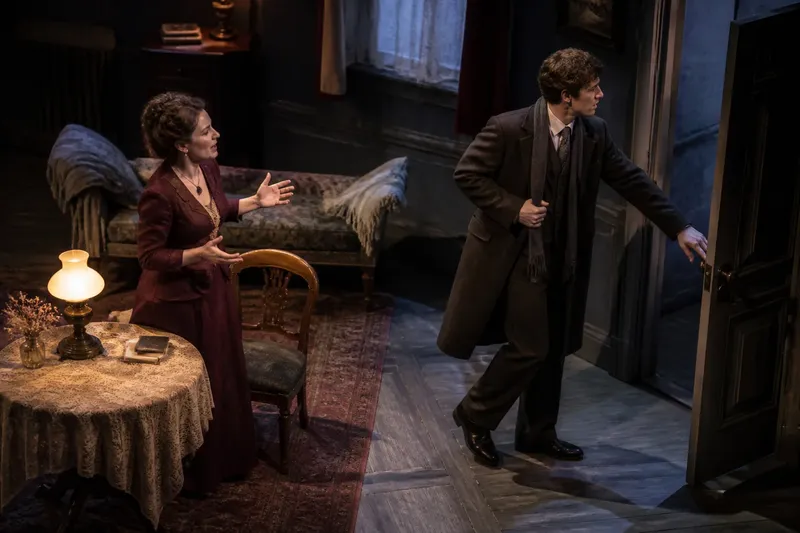
The natural gesture on stage is usually a carefully shaped choice, not a movement that simply escaped an actor’s attention. Watch a performer reach for a cup, turn toward a doorway, or smooth a sleeve: the action may look casual, yet its timing and shape help the audience understand what matters. To see the craft, follow the gesture from its first impulse to its effect in the room.
What makes a gesture seem natural?
A stage gesture seems natural when it fits the character’s circumstances and does not call attention to its own design. That does not mean it is unplanned. An actor may choose how quickly to move, how far to turn, and whether to finish the action before or after speaking. Those decisions make a gesture legible while keeping it connected to the scene.
Naturalness is therefore a style, not an absence of style. A spare performance may rely on small shifts of weight and restrained hand movements. A broad comic performance may use a sharply timed glance or an expansive shrug. Either can feel truthful if its choices suit the play’s world and the relationships onstage.
Begin by separating what the character needs from what the actor does. The character might want to hide a letter; the actor might fold it, hold it too still, or put it away at a conspicuously ordinary moment. Each version gives the audience different information. Look for the point at which the physical action becomes part of the scene’s meaning.
How should you follow a gesture in real time?
Choose one performer and one action rather than trying to read the whole stage at once. A small action often offers a clearer trail than a dramatic entrance. Follow it in this order:
- Notice the starting condition. Is the performer standing comfortably, guarding an object, avoiding another person, or preparing to speak? The body’s condition gives the action a context.
- Watch for the cue. A line, sound, glance, or partner’s movement may prompt the gesture. Notice whether the actor responds immediately or leaves a pause.
- Track the shape. Does the hand move directly, hesitate, or take a roundabout path? Does the torso follow, or does the performer keep still while the hand acts?
- Observe the finish. The gesture may stop at its practical endpoint, linger, or be interrupted. That finishing choice can reveal more than the movement itself.
- Check the response. Does another character notice, ignore, imitate, or resist the action? A gesture can change the scene even when nobody comments on it.
Say you are watching an invented scene in which a guest wants to leave without offending a host. The guest closes a coat, takes a breath, and reaches for the door just as the host begins a new story. If the hand pauses on the latch, the delay can show the guest’s competing duties. If the guest turns back before the host notices, the same movement may read as politeness or uncertainty. The observable action is simple; its timing changes what you infer.
What does timing tell you?
Timing is the relation between an action and the events around it: a line, a silence, another person’s movement, or a change in the scene. A gesture that begins before speech may suggest that the thought is already settled. One that follows a line can seem like a response, while a delay may make the audience wait for the character to commit.
Pay attention to the difference between a pause that belongs to the character and one that belongs to the performance’s rhythm. An actor may hold a look because the character is searching for an answer, or because the silence lets the audience register a shift. The two purposes can overlap. Instead of deciding too quickly, note what the pause makes you expect and whether the next action satisfies or redirects that expectation.
Also watch for gestures that happen alongside speech rather than illustrating it. A character can say “I understand” while turning away, or describe confidence while repeatedly adjusting a cuff. The mismatch may signal discomfort, concealment, or simply a habitual manner. The surrounding scene helps distinguish an intentional contradiction from a detail with little dramatic weight.
How can repetition change a movement?
Repetition gives an audience a point of comparison. The same action can return with a changed pace, range, or consequence, allowing a performer to show development without explaining it aloud. A character who once reaches for a chair before sitting may later remain standing; the altered pattern can suggest a new decision, even if the movement itself is modest.
Look for repetition within a scene as well as across a performance. A performer might check a pocket whenever a difficult subject comes up. On the first occasion, the action may seem like an ordinary habit. When it returns during a more exposed moment, the audience may connect it with anxiety or avoidance. That meaning is not automatic: the actor’s focus, the scene’s context, and the other performers’ responses all shape the association.
Repetition can also make a gesture feel less natural on purpose. A movement repeated with exact regularity might suggest ritual, control, or a character stuck in a pattern. A movement that becomes rougher each time can imply strain. Ask not only what repeats, but what changes between appearances.
How do theatrical styles shape ordinary movement?
Theatrical style influences what counts as an everyday gesture. In a closely observed domestic scene, a slight shift in gaze may carry weight. In a heightened comedy, a performer may make the same thought readable through a larger turn or more decisive hand movement. Neither approach is a neutral standard against which the other should be judged.
Consider the conditions of the performance. A large auditorium may call for movement that reads clearly from a distance; a small room can make a subtle action visible. A stylized production may use repeated shapes, formal pacing, or direct address. In each case, movement has to communicate within the theatrical language the production has established. A gesture that would seem overstated in one scene may be precisely proportioned in another.
Notice how speech and movement work together. Some productions make physical action carry a thought that dialogue leaves unspoken. Others keep gesture restrained so that a change in voice or stillness becomes more prominent. The useful question is not whether the actor behaves as a person might in private, but whether the movement belongs to this character, this moment, and this performance style.
What should you notice about partners and space?
A gesture rarely belongs to one performer alone. A character’s turn may be shaped by where a scene partner stands, whether that person is watching, and how much room is available. Actors respond to one another’s pace and attention, so a movement can alter the relationship even when it does not involve touch.
Follow the space around the gesture. Does the performer cross an open area, stay close to furniture, or position a body between two people? A step aside may offer another character room, or it may quietly block an approach. The same spatial choice can read differently depending on the scene’s tension and the direction of the other performer’s gaze.
When an action appears spontaneous, look for how the other actors receive it. They may leave room for it, answer with a counter-gesture, or continue as though they have not noticed. That response tells you whether the movement is part of the shared exchange or remains private to the character. It can also reveal the scene’s balance of attention: who is leading, who is yielding, and who is trying to redirect the encounter.
Which questions help you read stage gesture?
How can you tell a character habit from a meaningful gesture?
Look for recurrence, timing, and consequence. A habit becomes more suggestive when it appears at a charged moment, changes under pressure, or draws a response from another character.
Does every movement need a hidden meaning?
No. Some movements establish practical business or help a performer inhabit the scene without carrying a separate message. Treat an interpretation as useful when it fits the surrounding action, not as a code that must be solved.
Why might an actor repeat a small action?
Repetition can make a pattern visible, establish a character’s routine, or let the audience notice a change. The meaning depends on how the later version differs and what is happening around it.
What if the gesture looks exaggerated?
Compare it with the production’s overall style and the space in which the audience watches. A larger movement may be intended to read clearly or to create a deliberate theatrical effect rather than imitate private behavior.
What is not worth the effort?
It is rarely useful to assign a fixed meaning to every lifted finger, crossed leg, or glance. A gesture can be practical, habitual, expressive, or several of these at once. If an interpretation requires ignoring the dialogue, the partner’s response, and the production’s style, set it aside and watch what happens next.
You also need not decide whether an actor’s movement is “realistic” before noticing how it works. Begin with the visible details: what prompted the action, how long it took, whether it returned, and what changed afterward. Those observations keep attention on the performance rather than on a private theory about the actor.
How can you leave the theatre with a sharper eye?
After watching a scene, recall one movement that seemed effortless and describe it plainly before interpreting it. For instance: “She looked at the door, waited through the other character’s line, then kept her hand on the chair.” That description gives you something specific to examine. You can then ask why the pause mattered, whether the action recurred, and how the scene partner answered it.
The natural gesture on stage is not a movement without craft; it is a movement whose craft fits the performance closely enough that attention stays with the character. Watch for the timing, repetition, and style that make it readable, and let the surrounding scene guide your interpretation. The next time a small action catches your eye, notice what changes in the room after it happens.